Home
IT History Society
Preserving memories of how computing evolved

Main navigation

  • Home
  • Register
  • Search
User account menu
  • Log in

Breadcrumb

  1. Home

Search

By aolley , 8 August 2013

iCHSTM 2013

Almost two weeks ago I was at the 24th International Congress for the History of Science, Technology and Medicine (iCHSTM) in Manchester, England. At more than 1700 registered participants it may have been the largest gathering devoted to the history of science, technolgoy and medicine ever.

SSEM Manchester museum close up

By aweissberger , 14 January 2013

CEO John Hollar's CHM Progress Report at Jan 7, 2013 IEEE Life Member Meeting

John Hollar, Computer History Museum (CHM) President and CEO, delivered a progress report on CHM activities at the January 7th IEEE Life Member meeting in Mt View, CA.  The CHM has become the leading institution that's archived computer artifacts, but is now recognized as a thought leader on the impact of computing on our society.

Four CHM areas were cited by John as being particularly successful:

By aweissberger , 22 June 2013

CHM Chairman Len Shustek- Tues June 25 @Oshman JCC in PaloAlto: The Amplifier for Our Brains- Who Invented the Computer?

Abstract

By aweissberger , 26 May 2013

Bob Metcalfe's Closing Keynote at Ethernet Innovation Summit - May 23, 2013, CHM in Mt View, CA

Bob Metcalfe's key points on the Ethernet Innovation Summit are summarized in this article:

http://community.comsoc.org/blogs/alanweissberger/bob-metcalfes-closing-keynote-ethernet-innovation-summit-may-23-2013-chm-mt-vi

40 years of Ethernet history discussed during day one; day two featured "movers & shakers" talking about current and future market trends and technologies.
....................................................
Metcalfe's closing keynote talk along with the Q & A session can be viewed at:

By stein , 23 May 2013

Going Once, Going Twice...A Working Apple 1

Apple_I-300Have you been longing for a working Apple 1 computer? Or maybe a reproduction of a Pascaline?

By aweissberger , 11 May 2013

Inventor Ted Hoff's Keynote @ World IP Day- April 26, 2013 in San Jose, CA

Introduction

The World IP Day program was to promote and celebrate the many benefits of intellectual property in San Jose and the SF Bay Area. San Jose and Silicon Valley lead the nation in patent generation and the city co-hosted this West Coast event to celebrate the contributions of innovators and creators worldwide.

By Nathan Zeldes , 9 April 2013

A Wonderful Adventure in Exhibition Space

Somehow my career has repeatedly led me into doing unexpected and wonderful things.

One such piece of serendipity has been the role I landed at the Jerusalem Science Museum as the curator of an exhibition in honor of Alan Turing. This project took a year and half, and gave me the occasion to work with some amazing people at the museum, interact with many more from around the world, and learn so much about that tragic genius, Alan Turing, of which I wrote here before.

By Nathan Zeldes , 8 April 2013

Alan Turing’s Earthshaking Philosophical Insight

Being the curator of the Alan Turing Year exhibition at the Jerusalem Science Museum, I was invited to sit on a panel dedicated to Turing’s legacy at the ICON Science Fiction, Imagination and The Future festival in Tel Aviv. My talk there was well received, and touches on some interesting truths, so I decided to share its content here. I hope you enjoy it as much as I have!

By aweissberger , 13 March 2013

CHM lecture: IBM Fellow Grady Booch on Computing: The Human Experience

Introduction:

In this informative March 11, 2013 lecture at the Computer History Museum (CHM), Grady Booch asked and tried to answer this question:  "What does it take to make "sentient" devices (that can feel, sense,  think and reason) out of silicon and software?"

By stein , 6 February 2013

The Day IBM Let Married Women Work

It's hard to imagine not being able to work at IBM if you're a woman who happens to be married, but  Gizmodo has published a memo from January 10, 1951  that discusses a "temporary modification" of IBM's personnel policy—yes, it finally allowed female employees to continue working once they were married. It says: 

Effective immediately and until further notice:

By aweissberger , 18 February 2013

Using Dense Social Networks to Progress a Brilliant Career in Computer Science!

Introduction

The February 10, 2013 Stony Brook (SBU) Northern CA Alumni Association meeting featured a very informative and enlightening talk by Ike Nassi, PhD (1974 Computer Science) about what he learned at SBU, the friends he made there, and use of his social network to further his career.

By aolley , 31 December 2012

The Turing Centenary - In Review

Turing Year Logo As 2012 closes, so does the Turing Centenary Year. The hundredth anniversary of Alan Turing's birth prompted many events, conferences and talks dedicated to Turing. A large list of such events was compiled by the Turing Centenary website.

By aolley , 25 January 2011

"Go away kid you bother me..."

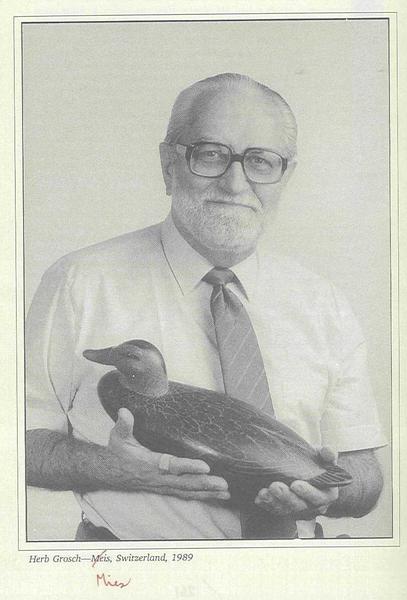
Today, January 25th 2011, marks the first anniversary of Herb Grosch's death.

Herb Grosch - a wild duck

By aweissberger , 6 January 2018

Tribute to radio and wireless transmission inventor Nikola Tesla

Nikola Tesla, whose name Elon Musk chose for his electric car company, was on the cover of Time magazine in 1931 for his achievements.  Unfortunately, he died a poor man in 1943 after years devoted to projects that did not receive adequate financing.  Although the main Tesla lab building on Long Island, New York is being restored by a nonprofit foundation — the Tesla Science Center at Wardenclyffe — the World System broadcast tower he built there was torn down for scrap to pay his hotel bill at the Waldorf Astoria in 1917.

By jcortada , 26 April 2018

Are Americans in danger of losing their Internet?

It’s hard to imagine life without the Internet: no smart phones, tablets, PCs, Netflix, the kids without their games. Impossible, you say? Not really, because we have the Internet thanks to a series of conditions in the United States that made it possible to create it in the first place and that continue to influence its availability. There is no law that says it must stay, nor any economic reason why it should, if someone cannot make a profit from it.

James W. Cortada

James W. Cortada is a historian of information technology and a former IBM executive whose scholarship has shaped understanding of the digital revolution. He is a Senior Research Fellow at the Charles Babbage Institute at the University of Minnesota, where his work focuses on the history of computing, business innovation, and the evolution of digital-era management practices.

Peter A. Cunningham

Peter A. Cunningham is the founder and former CEO of INPUT, a leading provider of market intelligence, research, and advisory services on government technology markets. Under his leadership, INPUT became a central resource for companies seeking to understand federal, state, and local government procurement, helping shape business strategy for thousands of firms in the public-sector technology ecosystem.

Peter J. Denning

Peter J. Denning is a leading computer scientist, educator, and author whose work spans operating systems, performance analysis, and the foundations of computing as a discipline. He is a Distinguished Professor of Computer Science at the Naval Postgraduate School in Monterey, California, where he chairs the Computer Science Department and directs the Cebrowski Institute for Information Innovation.

Esther Dyson

Esther Dyson is an investor, journalist, author, and philanthropist whose career has spanned the formative decades of the digital age. After studying economics at Harvard University, where she wrote for The Harvard Crimson, she began her professional life at Forbes, quickly rising from fact-checker to reporter. She later moved into Wall Street analysis, covering technology and emerging companies, before taking on a more entrepreneurial role in the tech industry.

George Dyson

George Dyson is a historian of science and technology whose writings explore the origins of digital computing, the evolution of intelligence, and the intersection of human and machine history. He is widely known for Turing’s Cathedral, his influential account of the mathematicians and engineers who built some of the first electronic computers at the Institute for Advanced Study.

Gerald Estrin

Gerald Estrin was a computer scientist and professor at the University of California, Los Angeles (UCLA), known for his influential work in computer architecture and reconfigurable computing. At UCLA he led the Machine Instruction Set Computer (MISC) and later the “reconfigurable processor” projects, both of which explored modular architectures and the idea that computer hardware could dynamically adapt itself to the needs of software—concepts that anticipated later developments in parallel processing and programmable hardware.

David Farber

David J. Farber (1934–2026) was a renowned computer scientist whose work influenced distributed systems, early networking, and Internet policy. He served as Professor Emeritus at Carnegie Mellon University, where he helped build one of the nation's leading computer science departments and conducted foundational research in distributed computing, email systems, and communications protocols. Farber passed away on February 7, 2026, in Tokyo, Japan, at the age of 91.

Bruce Gilchrist

Bruce Gilchrist was a computing pioneer whose work helped establish the role of university computing centers as engines of research and innovation. As director of the Columbia University Computer Center, he oversaw the expansion of large-scale computing resources for scientific, engineering, and administrative use during the early mainframe era.

Martin Goetz

Martin A. Goetz was a software industry pioneer best known for receiving the first U.S. patent issued for computer software. In 1968 he was granted a patent for a data-sorting algorithm developed at Applied Data Research (ADR), establishing a landmark precedent that helped legitimize software as intellectual property and as a product independent of hardware manufacturing.

Jay Goldberg

Jay Goldberg was a venture capitalist and entrepreneur who co-founded Hudson Ventures, a New-York–based venture fund investing in early-stage information technology companies. Under his leadership as managing partner, the firm supported startups in software, communications, security, and Internet infrastructure during key periods of industry expansion.

Pagination

  • First page
  • Previous page
  • …
  • Page 2
  • Page 3
  • Page 4
  • Page 5
  • Page 6
  • …
  • Next page
  • Last page

<none>

  • About
    • Welcome Letter
    • Mission
    • Board & Trustees
    • Operating Plan (2026)
    • Definition of IT
    • Background
    • Donors
    • Benefits
    • Privacy Policy
    • Terms of Use
  • Committees
    • 2026 Committee Search
    • Curation
    • Editorial
    • Events
    • Honor Roll
    • Membership
    • Development
    • Infrastructure
  • Contact Us

<none>

  • FAQ's
  • Contact
  • .
  • .
  • .
  • .
  • .
  • .
  • .

Contact Us

  • Contact: Aaron C. Sylvan,
    Board Chair
  • Address: IT History Society
    534 Third Avenue
    Suite 1248
    Brooklyn, NY 11215
  • Email:      info@ithistory.org

Discussions With Us

ITHS LinkedIn Group

ITHS Discord Server

Follow Our Updates

ITHS on BlueSky

ITHS on Instagram

  • © 1977- IT History Society, Inc. All rights reserved
  • Terms of Use
  • Privacy Policy

Support the ITHS

Make payments with PayPal - it's fast, free and secure! Learn about supporting IT History Society

Content Type

  • (-) Article (111)
  • (-) Team (48)
  • Basic page (53)
  • Carousel (1)
  • Company (9888)
  • Contact (1)
  • Hardware (16779)
  • Historical Resource (133)
  • Home Concept (1)
  • Honor Roll (1891)
  • Members (873)
  • One Page (1)
  • Quote (683)
  • Software (2244)
  • Twitter Feed (1)

Team Category

  • Trustee (31)
  • Deceased (23)
  • Board Member (9)
  • Emeritus (8)
  • Chair (1)
  • Secretary (1)
  • Treasurer (1)
Powered by Drupal