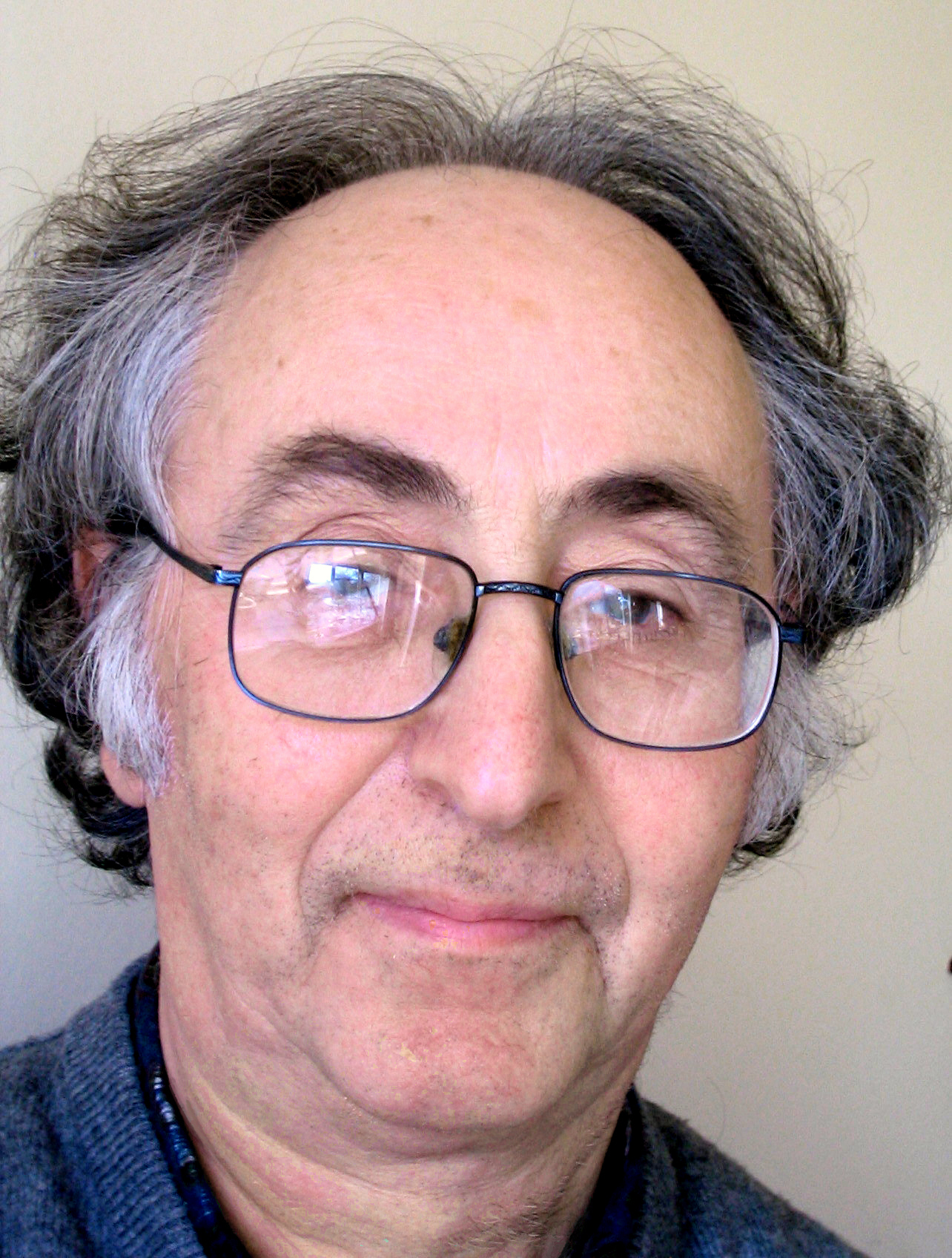
Winner of a 1/2 share of the 1973 Nobel Prize in Physics for pioneering theoretical work on superconductivity, Josephson is a Welsh physicist known for his prediction of the eponymous Josephson effect. He has served as a retired professor at the University of Cambridge, where he headed the Mind—Matter Unification Project in the Theory of Condensed Matter (TCM) research group, and has been a fellow of Trinity College, Cambridge.
He attended Cambridge University, where he gained a BA in 1960. While an undergraduate, Josephson became notorious as a brilliant and self-assured student. A former lecturer remembered the importance of being particularly precise if addressing a class that included him; if a mistake was made, he would not be afraid to politely point it out after the lecture. As an undergraduate he published a paper in which he calculated a thermal correction to the Mössbauer effect that reconciled previously different measurements of gravitational red shifts reported by teams in the US and UK. After completing his undergraduate degree he continued to study at Cambridge, and in 1964 was awarded his PhD in physics.
He became a fellow of Trinity College, Cambridge in 1962 before moving to the United States to take a position as Research Assistant Professor at the University of Illinois. Josephson returned to Cambridge University in 1967 as an Assistant Director of Research at the Cavendish Laboratory and then a professor of physics in 1974, a position he retained until his retirement in 2007. In the 1970s he learned Transcendental Meditation. From 1983 onward he has been appointed a Visiting Professor at various institutions, including Wayne State University in 1983, the Indian Institute of Science in 1984, and the University of Missouri-Rolla in 1987.
He has been a member of the Theory of Condensed Matter (TCM) Group, a theoretical physics group at the Cavendish Laboratory, for much of his research career. While working at the TCM Group, Josephson was jointly awarded the Nobel Prize in Physics in 1973, while still only a Reader in Physics, for his pioneering theoretical work on superconductivity. He shared the award with Japanese physicist Leo Esaki and American physicist Ivar Giaever, who each received 1/4 of the prize, with 1/2 going to him. Unusually, none of them held professorships at the time of the award, and it is rare that academics ranked below professors win the prestigious prize. In addition, and also unusually, each of the three performed the relevant research prior to being awarded his PhD.
Specifically, the prize was awarded for "his theoretical predictions of the properties of a supercurrent through a tunnel barrier, in particular those phenomena which are generally known as the Josephson effects," which led to the invention of the Josephson junction. These junctions are key components in devices used to make highly sensitive measurements in magnetic fields. Further use for his discoveries was realized by researchers at IBM who, by 1980, had assembled an experimental computer switch structure that would permit switching speeds from 10 to 100 times faster than those possible with conventional silicon-based chips, increasing data processing capabilities by a vast amount.
He also directed the Mind—Matter Unification Project in the TCM Group. Despite his retirement, Josephson has continued to be active within the Mind—Matter Unification Project. Among his aims has been to find mechanisms behind phenomena such as the possibility that organisms can learn to bias the statistics of supposedly random physical processes through having a better understanding of their patterns than non-living matter. He has sat on the Advisory and Editorial Board of NeuroQuantology: An Interdisciplinary Journal of Neuroscience and Quantum Physics.