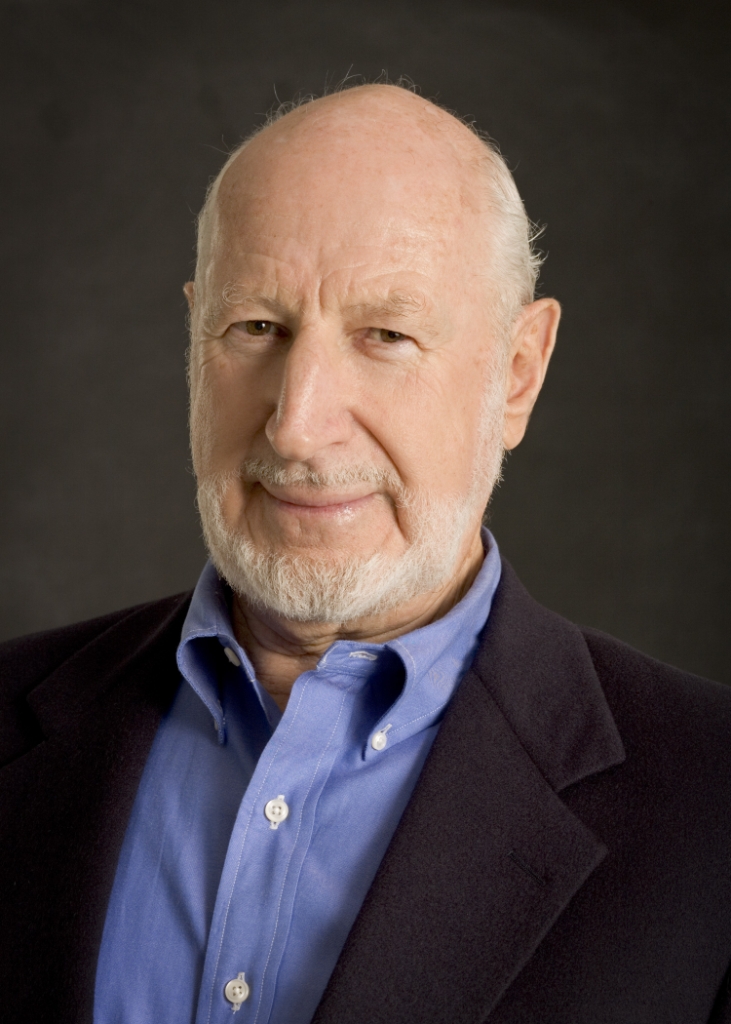
Developer of the ALOHAnet system for wireless computer communication and inventor of the first random access protocol, Abramson was an American engineer and computer scientist. He was born in Boston, Massachusetts, and received an A.B. in physics from Harvard University (1953), an M.A. in Physics from UCLA (1955), and a Ph.D. in electrical engineering from Stanford University (1958).
Abramson worked as a research engineer at the Hughes Aircraft Company until 1955, when he joined the faculty at Stanford University (1955–65). He served as visiting professor at University of California at Berkeley (1966), before moving to University of Hawaii (1968–94), where he served as professor of both Electrical Engineering and Computer Science, and Director of Aloha Systems. He later served as Vice President of Aloha Networks, established in San Francisco (1994).
His early research concerned radar signal characteristics and sampling theory, as well as frequency modulation and digital communication channels, error correcting codes, pattern recognition and machine learning, and computing for seismic analysis. In the late 1960s, Abramson worked on the ALOHAnet and continued to develop spread spectrum techniques in the 1980s.
In 1998, he was given the IEEE Information Theory Society Golden Jubilee Award for the invention of the first random access protocol. In 2007, Abramson was also awarded the IEEE Alexander Graham Bell Medal.