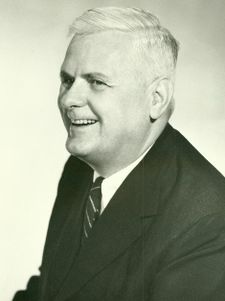
A major contributor to mathematical logic and the foundations of theoretical computer science, Church is sometimes called the father of theoretical computer science. He is best known for the lambda calculus, the Church–Turing thesis, the Frege–Church ontology, and the Church–Rosser theorem. Church (June 14, 1903 – August 11, 1995) was an American mathematician and logician. Church's principal accomplishments included the following:
His proof that Peano arithmetic and first-order logic are undecidable. The latter result is known as Church's theorem.
His articulation of what came to be known as the Church–Turing thesis.
His role as founding editor of the Journal of Symbolic Logic, editing its reviews section until 1979.
His creation of the lambda calculus.
The lambda calculus emerged in Church's famous 1936 paper showing the existence of an "undecidable problem." This result preceded Alan Turing's famous work on the halting problem, which also demonstrated the existence of a problem unsolvable by mechanical means. Church and Turing then showed that the lambda calculus and the Turing machine used in Turing's halting problem were equivalent in capabilities, and subsequently demonstrated a variety of alternative "mechanical processes for computation." This resulted in the Church–Turing thesis.
The lambda calculus influenced the design of the LISP programming language and functional programming languages in general. The Church encoding is named in his honor.