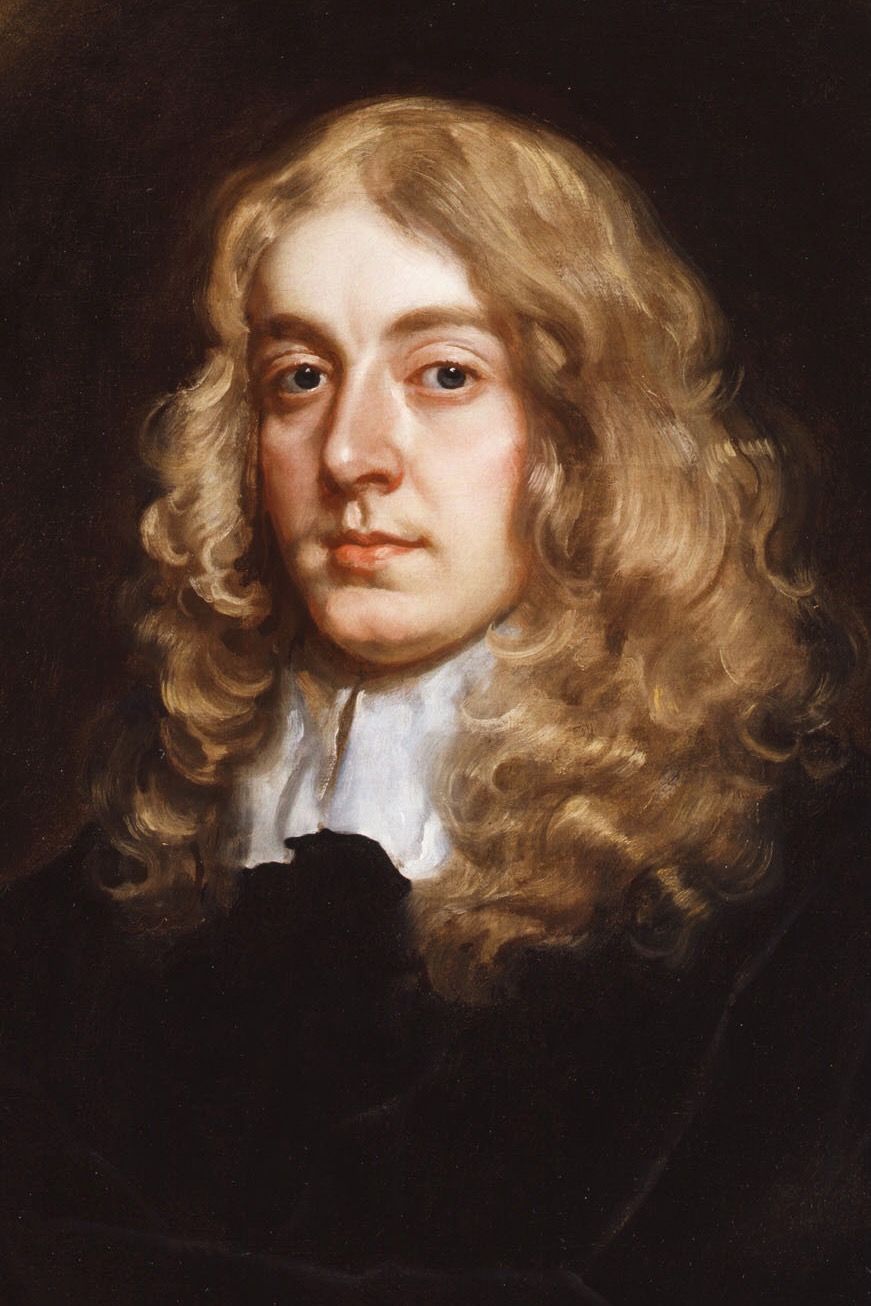
Credited with early developments in relation to computing, hydraulics and steam power, Morland was a notable English academic, diplomat, spy, inventor and mathematician of the 17th century. He was educated at Winchester School and Magdalene College, Cambridge, where he became a Fellow in 1649. Devoting much time to the study of mathematics, he also became an accomplished Latinist and was proficient in Greek, Hebrew and French — then the language of culture and diplomacy.
While a tutor at Cambridge, he first encountered Samuel Pepys, who became a lifelong acquaintance. On 18 July 1660 Morland was created a baronet and given a minor role at court, but his principal source of income came from applying his knowledge of mathematics and hydraulics to construct and maintain various machines. These included: a non-decimal adding machine (working with English pounds, shillings and pence); a machine that made trigonometric calculations; and an "arithmetical machine" by which the four fundamental rules of arithmetic were readily worked "without charging the memory, disturbing the mind, or exposing the operations to any uncertainty." The last of these is regarded by some as the world's first multiplying machine, and an example is held in the Science Museum in South Kensington. He also developed new forms of barometers and designed a cryptographic machine.
From 1677, Morland lived in the Vauxhall area of central London and moved to a house in Hammersmith in 1684. He began to go blind, losing his sight in about 1692. Three years later, he died on 30 December 1695 and was buried on 6 January 1696 in Hammersmith Church.